A Forensic Audit of the Junk Drawer, Where Every Item Is a Tiny Confession
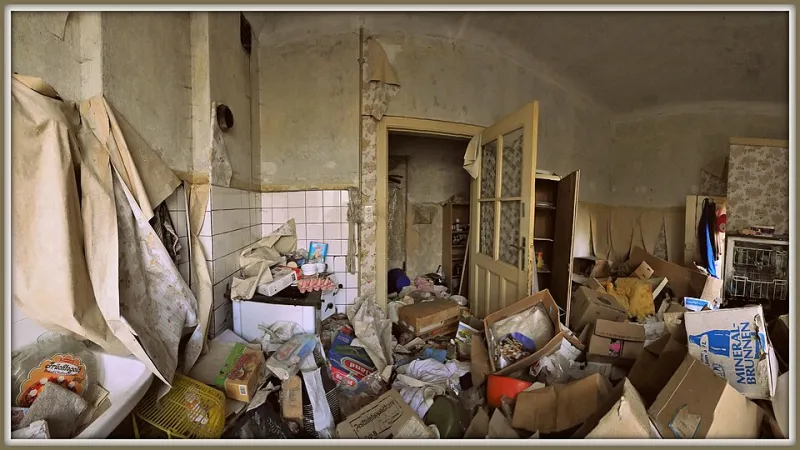
Photo: Rolf Dietrich Brecher from Germany, CC BY 2.0, via Wikimedia Commons
Every home contains one drawer that has quietly stopped functioning as furniture and started operating as a low-budget archaeological site. You know the one. It sticks. It has a screwdriver in it that is, somehow, always the wrong size. Nobody has opened it on purpose since roughly 2016, and yet it is packed to the runners.
This is not an article about decluttering. Decluttering implies a plan and a free Saturday. This is a forensic audit — an honest accounting of what lives inside the drawer every member of your household has silently agreed never to discuss.
Ground Rules for the Audit
Each item is scored on three axes: utility (would a sane adult actually use this), emotional weight (does discarding it feel like betraying a former version of yourself), and the odds you will need it again, expressed in decades because years are far too generous.
Spoiler alert: the drawer is not a storage solution. It is a confession.
Tier 5 — Genuinely Useful, Do Not Touch
The tape measure. The good scissors, which are in there because the kitchen scissors went missing in 2019 and were never reported. A pen that works, next to eleven pens that do not. This is the only layer of the drawer with a job, and it is why the drawer gets a pass every single year. Nobody wants to be the person who throws away the tape measure and then needs to measure a couch.
Tier 4 — The Deferred Decisions
Here we find the twist ties, balled up like tiny metallic tumbleweeds. The rubber bands, half of which have fossilized into brittle little rings that snap on contact. A ziplock baggie containing spare buttons from a coat you donated to Goodwill in 2021, each button labeled with a fabric tag in a handwriting that is not yours.
These items represent hope. Hope that a future, more organized version of you will need a twist tie and will know exactly where to find one. That person has never shown up. That person is not coming.
Tier 3 — The Museum of Dead Technology
This is the drawer's most emotionally complicated wing. Behold: a charger for a phone you owned during the Obama administration. A Mini-USB cable, a format that has been obsolete long enough to qualify for historic preservation. An aux cord for a car you no longer drive. A SIM card popper that came free with something. One (1) iPod Shuffle, operational status unknown, battery status definitely fatal.
You keep them because throwing them away feels like admitting the past is over. It is over. The Mini-USB cable knows.
Tier 2 — The Mystery Objects
Three keys that open nothing you own. You have tested them. You tested them again last spring. A single screw, loose, unpaired, its siblings scattered across the known universe. An Allen wrench from an IKEA bookshelf that has since been disassembled, moved twice, and rebuilt.
And then there is the plastic object. The one you cannot identify. It is gray. It has a tab. It came from something. It is, at this point, essentially an artifact of unknown religious significance, and you will move it to your next home in a plastic bin labeled MISC.
Tier 1 — The Paper Layer
Down at the bottom, compressed like geological strata, sits the paper. Takeout menus for three restaurants that closed before the pandemic — one of which is now a vape shop. Coupons that expired in 2022, kept in a neat stack, as if expiration dates were a suggestion. A warranty card for a toaster that has since been replaced twice. A business card from a man named Doug whom you met at a conference and have not thought about since.
The paper layer is less a collection and more a sediment. Removing it would require tools and emotional resolve. Neither is available in this drawer.
The Battery Underworld
Special mention must go to the battery pile, which sits in a small dish like a shrine. There are AA batteries in there. There are AAA batteries. There are button cells for a watch you stopped wearing. Not one of them will power anything. They were placed in the drawer at the moment they died, which means the drawer is less a storage unit and more a hospice. Every time you need a battery you go in hopeful and come out holding a cylinder of pure disappointment.
What the Drawer Is Actually Telling You
The junk drawer is an optimism engine. It runs on the belief that chaos can be contained by a single designated zone, that preparation is the same thing as organization, and that closure is something you can achieve by sliding a wooden panel until it clicks.
It cannot. The drawer fills back up within eleven days of any purge. The twist ties return. The mystery keys multiply. And you will keep closing it, gently, with your hip, and telling yourself you will deal with it in January.
That is not a drawer. That is a personality, and it has a handle.