Muted, Frozen, and Mortified: The Unofficial Rulebook for Surviving Work Video Calls
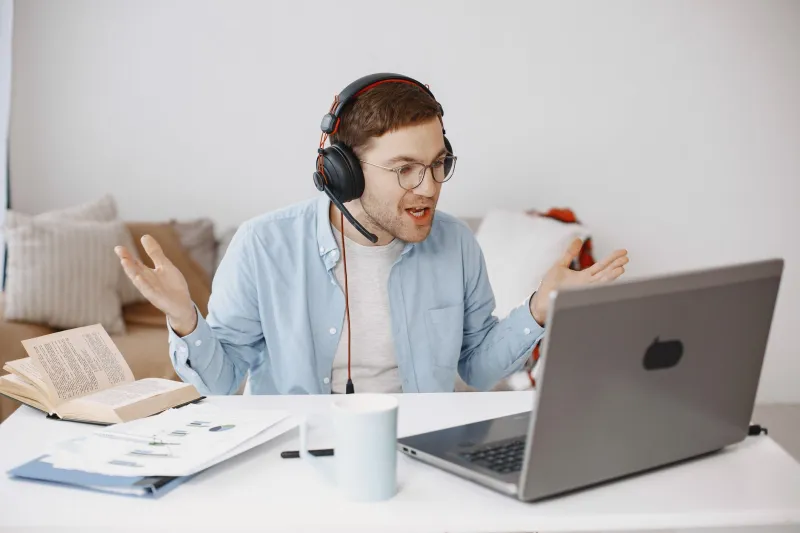
Remote work promised us freedom, flexibility, and the ability to wear pajama pants during board meetings. What it delivered instead was a masterclass in public humiliation, technical chaos, and the slow psychological erosion that comes from staring at your own face for eight hours a day. Welcome to the video call era — please make sure you're muted.
Somewhere between 2020 and now, an entirely new social contract was forged in the fires of bad Wi-Fi and accidental screen shares. Nobody wrote it down. Nobody agreed to it. And yet, violate any of its sacred commandments and you will feel the silent, pixelated judgment of twelve coworkers staring back at you from their own carefully staged home offices.
Consider this your survival guide.
The Camera Angle Is a Lifestyle Choice
There is a reason every person on your team appears to be broadcasting from a minimalist Scandinavian loft despite definitely living in a two-bedroom apartment in suburban Ohio. That reason is called the strategic camera tilt, and it is a fine art.
The rules are simple: angle the laptop just high enough to show the one clean bookshelf in the room. Make sure those books look smart — a little Hemingway, maybe a business title you've never opened. Under no circumstances should the camera drift left, where the laundry mountain has achieved sentience.
Pro tip: A ring light doesn't just illuminate your face. It obscures everything behind you in a warm, flattering glow that says "I am a professional" while your cat destroys the blinds just off-screen. Invest accordingly.
The Mute Button Is Sacred Ground
There are two types of people in this world: those who forget to unmute before speaking, and liars.
We have all been there. The meeting has been droning on for forty minutes. You have a genuinely good point to make — maybe the point, the one that turns the whole conversation around. You take a breath, you lean forward with authority, and you deliver your insight with confidence.
Silence.
Ten faces stare at you. Someone types "you're on mute" in the chat. You unmute, laugh it off, and begin again — at which point you have completely forgotten what you were going to say. You say "never mind, it wasn't important" and die a little inside.
On the flip side, there is the person who never mutes. The whole call knows they're eating chips. The whole call can hear their dog. The whole call just got an unfiltered audio tour of their afternoon, and nobody asked for it.
The Fake Nod: A Masterclass in Deception
If you've been on more than three video calls in your life, you have mastered the Fake Nod. This is the slow, rhythmic head movement that signals active engagement while your brain is fully checked out, composing a grocery list or wondering whether you left the stove on.
The Fake Nod is closely related to the Performative Typing, where you hammer at your keyboard during a presentation to look busy, even though you are absolutely just typing "I am pretending to take notes" into a blank document.
Do not feel shame. These are survival mechanisms. The human brain was not designed to process back-to-back one-hour meetings with no breaks. The Fake Nod is not dishonesty — it is coping.
The 'Can Everyone See My Screen?' Panic Spiral
Sharing your screen on a video call is a high-stakes gamble every single time. Before you click that button, your brain should run through the following checklist:
- Do I have seventeen browser tabs open, several of which are embarrassing?
- Is my desktop wallpaper appropriate for work?
- Are there any open Slack threads where I complained about this exact meeting?
- Did I accidentally leave a YouTube video paused mid-play?
If you answered yes to any of the above, close everything before you share. Everything. Start fresh. Open only the document you need, like you are defusing a bomb, because you basically are.
And for the love of all that is holy: check your notifications settings. Nobody needs to see a pop-up from your mom asking if you're eating enough appear in the middle of your quarterly sales presentation.
The 'Sorry, You Go Ahead' Infinite Loop
When two people try to speak at the same time on a video call, something breaks in the fabric of human communication. Both people stop. Both people say "sorry, go ahead." Both people start again simultaneously. Both people stop again. This loop can continue for up to four rounds before someone just types what they were going to say in the chat like a coward.
This phenomenon has no fix. It is a fundamental flaw in the video call format, born from the absence of the subtle social cues we use in person — the lean-in, the breath before speaking, the eye contact. Without these signals, we are all just shouting into a digital void and hoping for the best.
The Background Cameo Hall of Fame
No survival guide would be complete without honoring the true stars of the video call era: the unplanned background guests. Children who wander in with urgent questions about snacks. Pets who choose the most important moment of the meeting to stage a dramatic entrance. Partners who walk through in various states of undress, blissfully unaware that forty people just witnessed them.
These moments are unscripted, uncontrollable, and absolutely hilarious — unless they happen to you, in which case they are a source of trauma that you will process for weeks.
Surviving in the Wild
At the end of the day, video call culture is just regular office culture with extra chaos and worse lighting. The same people who talked over everyone in conference rooms still talk over everyone on Zoom. The meeting that could have been an email is still a meeting — it's just now a meeting where you're also wearing slippers.
The best thing you can do is embrace the absurdity. Mute yourself preemptively. Angle that camera. Nod with confidence even when you've lost the plot. And if your cat walks across your keyboard and sends a string of gibberish into the company-wide chat?
Own it. At least it was more interesting than the agenda.